
Locked Out: The housing accessibility crisis
“Everyone has the right to a standard of living adequate for the health and well-being of himself and of his family, including food, clothing, housing and medical care and necessary social services.”
In recent years, the Global North has experienced a dramatic shift in the housing landscape, with affordability emerging as a critical issue for many residents, both in urban centers and rural areas. Over the past decade, house prices in Europe have surged by an average of more than 50%. This can be seen in the following graph.
EU House price index
So what’s driving this trend? At first glance, one might assume that increased demand is the culprit. However, the population living in Europe has only grown by a mere 1.3% during the same period. In fact, there is now more housing available per thousand inhabitants than there was 15 years ago. As seen in the following graph, in Europe there is slightly more than one residence for every two people. If consifering the whole OECD, the ratio is a bit smaller, but it still is more than 450 homes per thousand people.
Number of dwellings per thousand inhabitants
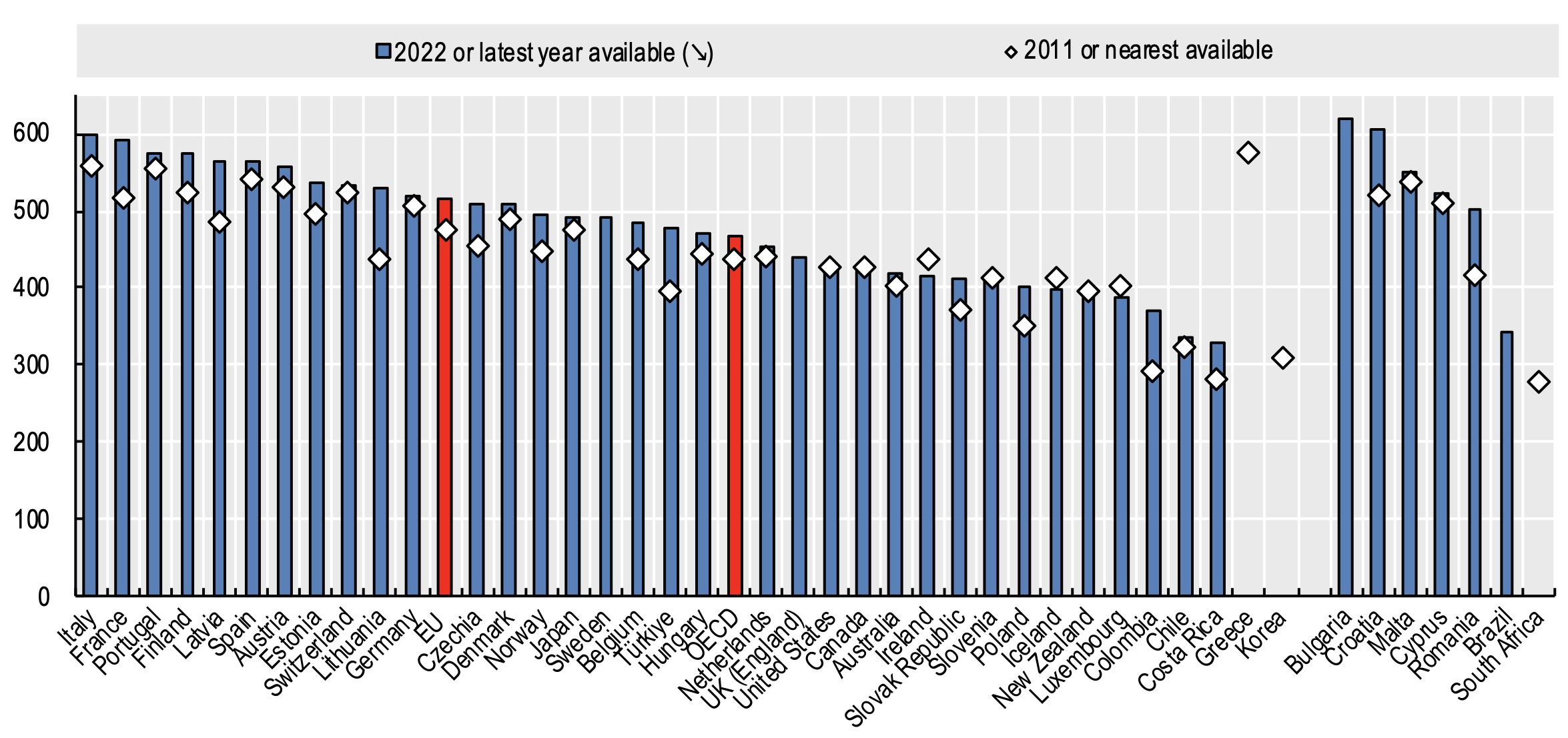
Source: OECD 2022
Despite this apparent abundance, many homes remain empty or are used only sporadically, as seen in this other graph. On top of that, a significant number of properties are dedicated to short-term rentals, specially in populat tourist locations, catering to visitors rather than serving as homes for local residents.
Vacant dwellings and seasonal and holiday homes
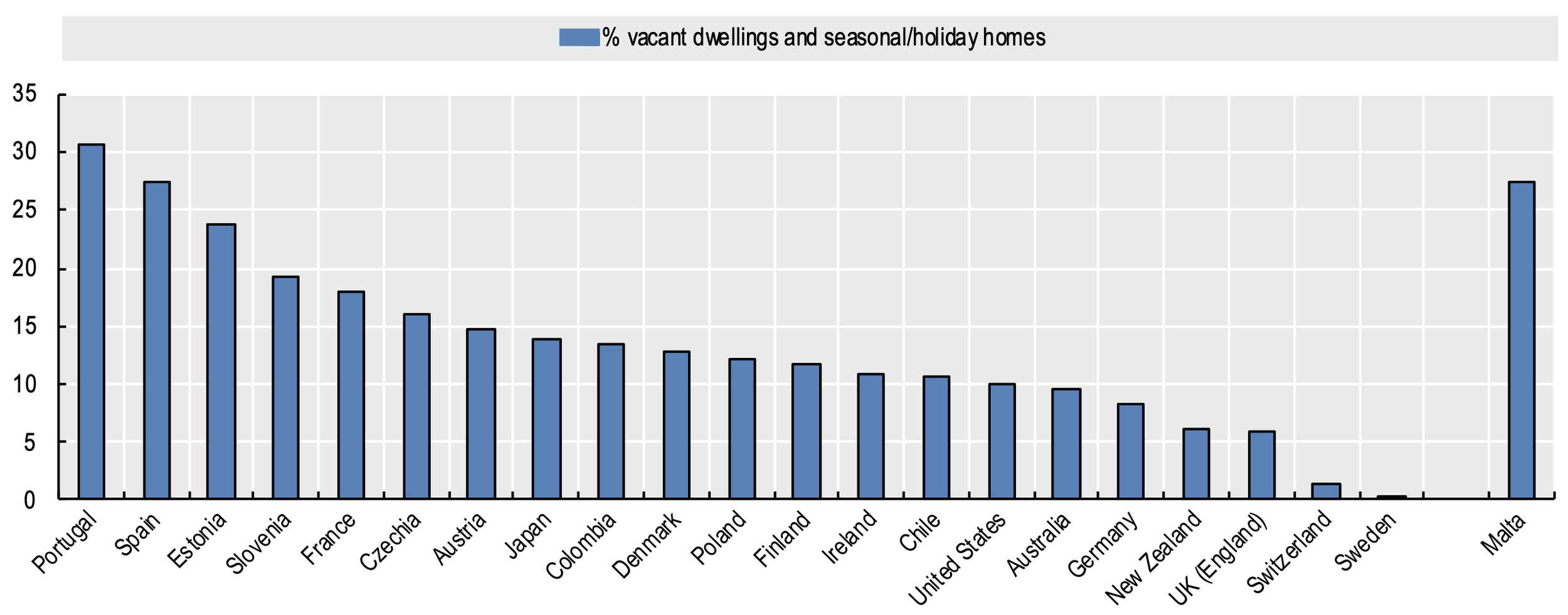
Percentage of vacant dwellings and seasonal/holiday homes as a share of the total dwelling stock. Source: OECD 2022
In fact, this is a very graphic example of financialization, a key factor contributing to the inaccessibility of housing. The influx of financial investors into local housing markets has transformed the perception of housing into an asset class, one that is expected to generate continuous returns and exchange value. This shift has been further fueled by management practices that promote rental housing as a secure, low-risk investment, alongside the rise of platforms like Airbnb that facilitate tourist accommodations. As a result, capital investment in housing has increasingly severed the connection between housing and its fundamental social function: providing a secure and dignified place to live. This disconnection undermines the realization of housing as a human right.
While international law recognizes the right to adequate housing, many governments remain reluctant to intervene significantly in the market to curb rising prices. This inaction presents another major challenge. Effective measures could include implementing strong rent-control regulations and policies that limit the use of housing primarily as an investment vehicle—addressing the root of the problem.
In order to improve the wellbeing of the majority, we must go beyond the dynamics of today’s housing market. Governments need to reverse this trend and reaffirm the right to housing for all; need to definancialize the housing market. Here are some key actions that can be taken:
Halt the Sale of Publicly Owned Land: Stop selling public land and housing stocks to private developers to preserve these assets for community use.
Implement Legal Measures for Affordable Housing: Utilize both existing and new legal frameworks to secure units for social, affordable, and adequate housing. This could involve the right of first refusal, expropriation for public purposes, supporting the reuse of vacant properties, and fostering tenants’ cooperatives.
Introduce Rent Stabilization Measures: Consider policies such as rent control, rent regulation, unlimited rental contracts, rental freezes, and solidarity funds to assist those struggling to pay their rent.
Demand Transparency in Real Estate Transactions: Ensure that real estate transactions are transparent to prevent speculative practices that drive up prices.
Re-municipalize Properties: Buy back privatized properties to convert them into public social housing.
Invest in Public Housing: Allocate supra-national, national, and public funds to develop and maintain public social housing.
Engage Communities and Stakeholders: Involve a diverse range of communities and stakeholders—including tenant unions, social movements, public authorities, and developers—in consultations to create inclusive housing policies.
It’s moment to work towards a housing market that prioritizes people over profit, ensuring that everyone has access to safe, affordable, and dignified housing.